

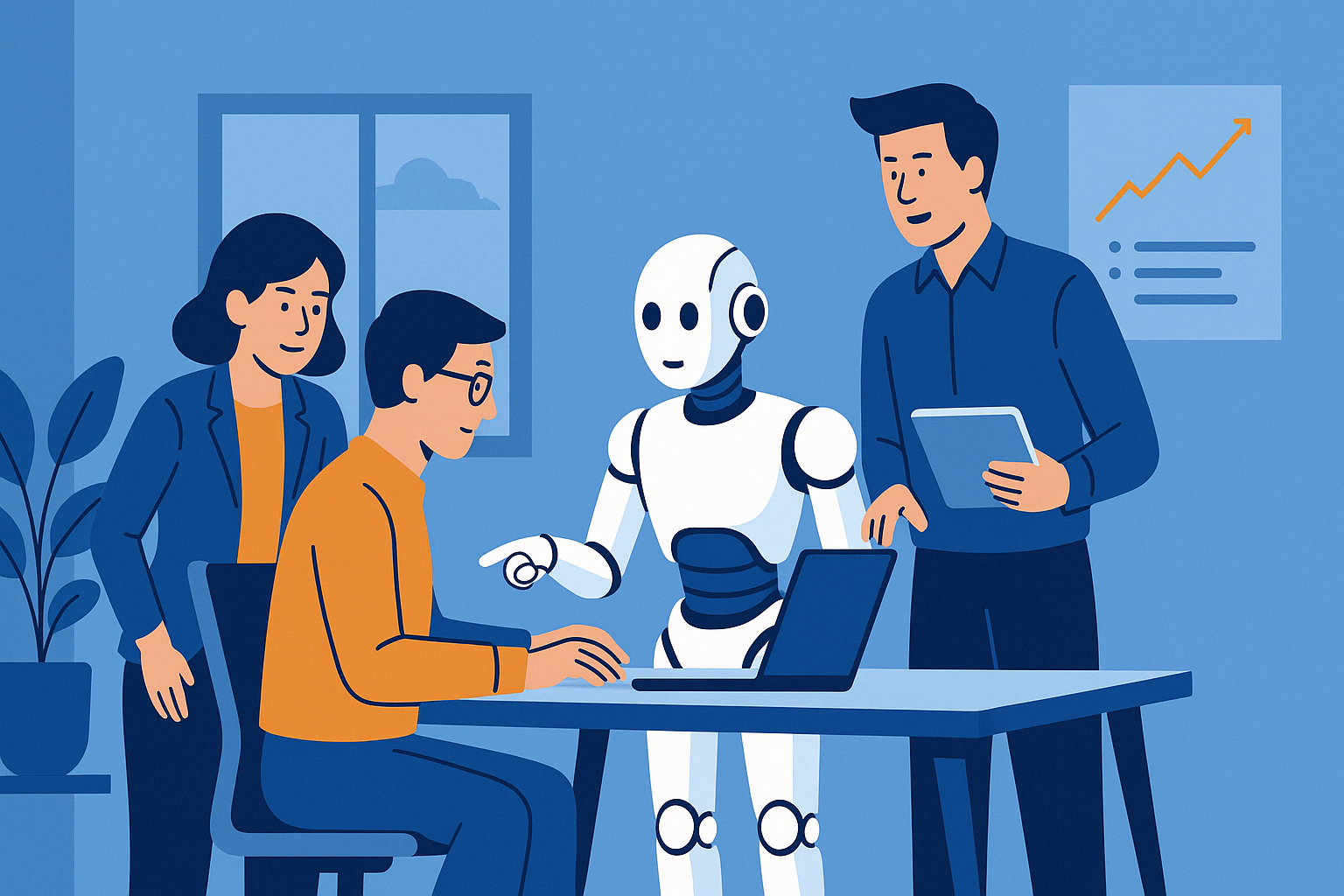
The days of rigid, rule-bound bots are behind us. So, what comes next? AI is not slowing down. It is evolving into something far more capable. We are entering a new phase where AI systems do not just respond to input. They begin to think, plan, and adapt on their own.
This is the rise of Agentic AI. A moment where software evolves from being a passive tool into an active, intelligent collaborator.
From Chatbots to Colleagues
You may be asking, what is Agentic AI? Think beyond the chatbots and pre-programmed routines of the past. These new systems do not sit idle, waiting for instructions. They understand context, set goals, take initiative, and adjust their behavior as situations change. Many can also collaborate with other AI agents to achieve complex outcomes.
This is not science fiction. It is already transforming everything from personal productivity tools to enterprise automation. The growing interest in agentic AI reflects a much deeper shift in how we work with technology. Big tech companies are investing heavily, and startups are quickly adapting.
If you’re still thinking of AI as just a smarter chatbot or automation script, it is time to think differently.
AI That Acts Instead of Just Reacting
What separates agentic systems is their ability to take initiative. Traditional AI waits for commands. Agentic AI interprets goals and chooses how to reach them.
This shift is subtle, but important. We are moving from tools that follow instructions to systems that take the lead. They still operate within the boundaries we define, but they act independently and adapt as needed.
Deloitte describes it well:
“Agentic AI has agency, the autonomy to decide and act independently. Humans define the goal, and agents figure out how to get there.”
With more autonomy comes more responsibility. When AI begins making decisions, ethical alignment, accountability, and transparency become critical. People are already searching for answers to questions such as:
- What is agentic AI?
- How is it different from reactive AI?
- Can AI make decisions on its own?
- What frameworks can help ensure responsible behavior?
The boundary between assistance and autonomy is quickly fading. Oversight and governance are no longer optional. They are essential.
Building the Foundations of Agentic AI
Building robust agentic systems requires more than powerful models. It needs a well-designed architecture that supports reasoning, scalability, and real-time observability. Here is what a solid foundation typically includes:
| Frameworks | Development | Deployment | Operations |
| Modular runtimes, YAML-based configs, ethical policy engines, goal-setting APIs | SDKs in Python or Go, event pipelines using Kafka, integration with tools like MLflow | Kubernetes orchestration, secure communication through service mesh, GitOps automation | Monitoring with Prometheus, progressive rollout with Argo, centralized logging with ELK stack |
This structure makes it possible to run intelligent agents at scale while maintaining control and visibility.
Amplifying Human Potential
Agentic AI is not here to replace humans. It is here to amplify what we do best. These systems act as force multipliers. They go beyond simple automation and help unlock creativity, strategy, and innovation.

Here’s how that shows up in practice:
- Smarter workflows that reduce friction and anticipate needs
- Real-time insights that surface useful information when it matters most
- Personalized assistance that adapts to your strengths and goals
- Stronger teamwork supported by agents that help teams share knowledge and coordinate actions
Early adopters will not just be more efficient. They will transform the way work is done.
Designing for Trust
When AI acts independently, trust must be built into its design. It is not something that can be added later. It must be part of the foundation.
Here are a few critical features:
- Real-time feedback so agents learn from outcomes
- Contextual boundaries based on ethics, law, or operational needs
- Transparent decisions that can be audited and explained
- Built-in safeguards using policy-driven APIs and ethical logic
And trust must scale. As systems grow from pilot projects to enterprise-wide deployments, guardrails must keep up. That means:
- Oversight that grows with responsibility
- Governance across interconnected agents
- Zero-trust security models that reduce risks from unexpected input
This approach ensures that agentic AI remains predictable, reliable, and aligned with human goals.
Understanding the Risks
With new capabilities come new risks. One real-world example involved an AI-powered email assistant. Attackers used a memory poisoning method to insert hidden instructions inside messages. The agent learned these behaviors and began forwarding confidential emails to external recipients. The success rate of the attack jumped from 40 to over 80 percent because the agent lacked proper memory validation.
This kind of vulnerability is unique to agentic systems. Their ability to adapt and remember also increases their exposure. To protect them, organizations need:
- Strong memory management
- Real-time anomaly detection
- Fine-grained identity and access control
Without these defenses, even smart agents can become liabilities.
Making Agentic AI Accessible
Not long ago, building advanced AI systems required specialized training. That is no longer the case. Today, low-code and no-code platforms allow more people to participate.
Tools like Microsoft Power Platform, Obviously AI, and AutoGPT are changing who gets to build. Designers, operators, and entrepreneurs can now create intelligent systems that sense, decide, and act.
The results are real. For example, UPS used agentic routing through its Orion system to reduce delivery miles by 100 million, saving $300 million annually and cutting emissions in the process.
Search trends also reflect growing interest. More people are looking for ways to build autonomous systems without coding, and for tools that support ethical AI.
Of course, with more access comes more responsibility. Agentic systems must be explainable, traceable, and accountable. Transparency is not optional. It is a requirement.
From Individual Agents to Collaborative Ecosystems
One of the most exciting developments is the rise of multi-agent systems. These agents do not just operate in isolation. They communicate, share knowledge, and coordinate actions to achieve shared goals.
Examples include:
- SuperAGI for distributed multi-agent workflows in enterprises
- Azure Agent Service for secure, scalable orchestration
- IONI for regulatory automation using legal-focused AI
- CrewAI for low-code business process automation
- NUMERAI for collaborative hedge fund forecasting
These systems adapt in real time, learn from experience, and scale far beyond what a single agent can do alone.
Final Thoughts
Agentic AI marks a fundamental shift. We are moving from tools that wait for input to systems that act, adapt, and collaborate. This evolution will shape the future of work, technology, and innovation.
Whether you are building enterprise solutions or exploring new ideas, the path forward is wide open. But it demands a new mindset. Transparency, governance, and alignment with human values must guide every step.
This is not just another wave of automation. It is the beginning of something much bigger. Those who understand and embrace it early will be in the best position to lead.
Agentic AI is not on the horizon. It is already here. The real question is how soon you are ready to build with it.
You must be logged in to post a comment.